
From Emo to E-Girls: The Evolution of Online Sad Aesthetics
Online culture is shaped by waves of aesthetics that define how people present themselves on social media. Among the most enduring are the sad aesthetics, which evolved from the emo culture of the 2000s into the e-girl look dominating platforms like TikTok and Instagram today.
This transformation reflects more than fashion—it shows how digital spaces allow emotions, style, and identity to merge. From dark eyeliner and emotional lyrics to neon hair, playful filters, and layered accessories, each stage of sad aesthetics captures how young people express vulnerability and rebellion online.
The Rise of Emo Culture in the 2000s
Emo was one of the first major youth movements shaped by the internet. Originating from punk and post-hardcore music scenes, emo culture embraced sadness and emotional honesty. The look was instantly recognizable: black clothing, studded belts, band tees, and heavy eyeliner.
Emo communities thrived on MySpace and early forums, where users shared music, poetry, and personal struggles. For many teenagers, it was the first time sadness was publicly expressed as a unifying identity. Emo style wasn’t just fashion—it was a lifestyle built around music, emotion, and community.
Emo Style Elements
- Black and red clothing combinations.
- Side-swept hair with bright highlights.
- Song lyrics used as profile captions and blog posts.
Emotional Core
At its heart, emo expressed vulnerability and the struggles of growing up. Its openness about sadness influenced later aesthetics online.
The Transition to Tumblr Sad Girls
By the early 2010s, the sad aesthetic shifted toward Tumblr. Here, the look became softer and more artistic. Instead of band culture, it drew inspiration from indie music, nostalgic photography, and poetic captions.
Sad girls on Tumblr curated feeds full of pastel tones, grainy black-and-white photos, and melancholic quotes. This version of the aesthetic emphasized self-reflection, turning sadness into something visually appealing and relatable.
Defining Features
- Pastel filters and vintage-style collages.
- Music from artists like Lana Del Rey and Lorde.
- A mix of fashion, poetry, and dreamy visuals.
Influence on Mainstream
Tumblr sad aesthetics blurred the line between art and lifestyle. Many modern online trends, from vaporwave to softcore fashion, trace their roots back to this era.
The Rise of E-Girls on TikTok
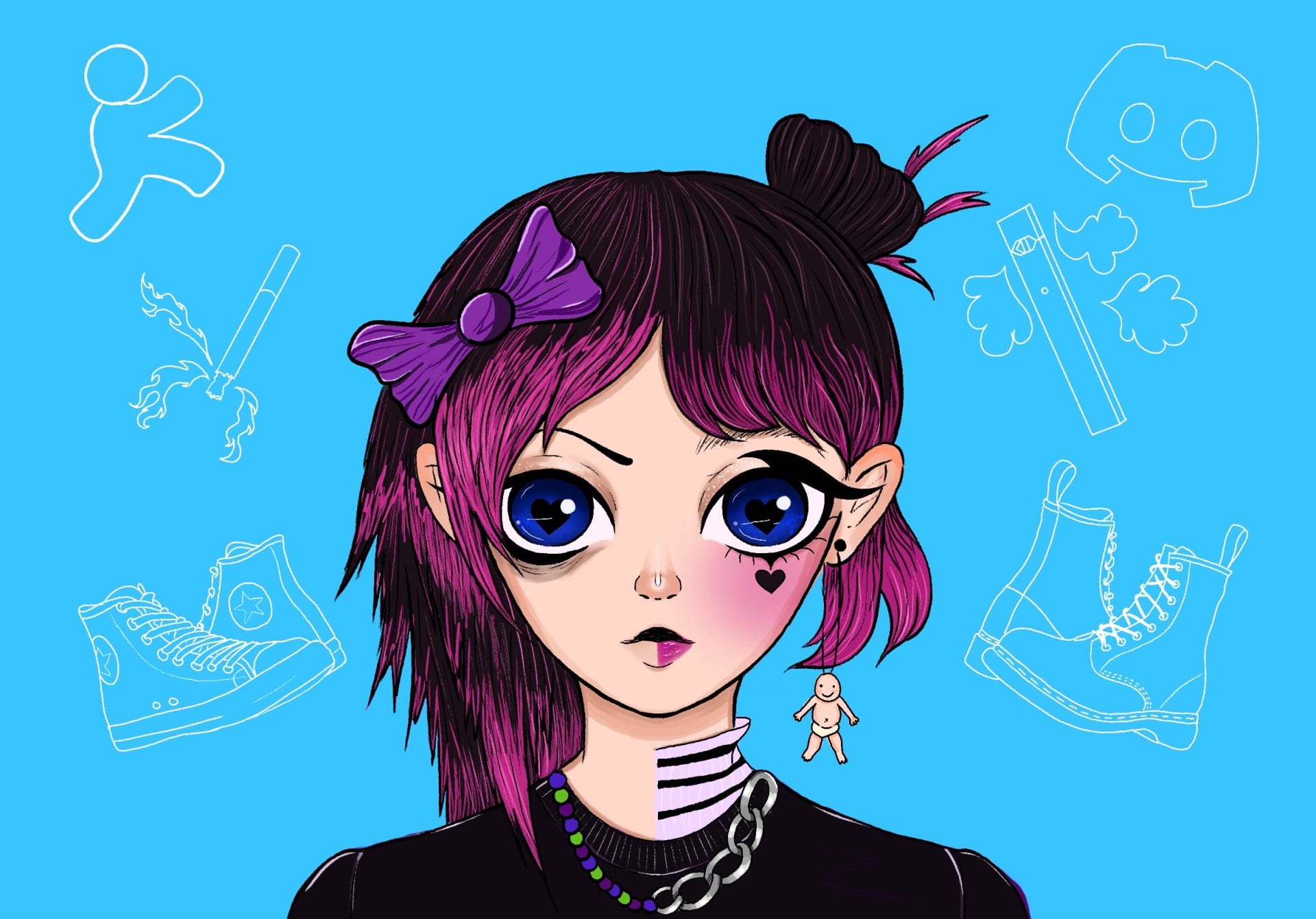
By the late 2010s, e-girls emerged as the latest evolution of online sad aesthetics. Popularized through TikTok, this style combined emo roots with internet-savvy performance. E-girls wear layered chokers, colorful hair, oversized sweaters, and heavy eyeliner, often mixing playful and sad tones.
Unlike emo or Tumblr aesthetics, e-girls are deeply interactive. Their look is tied to streaming, short videos, and online communities. While sadness remains part of the identity, it is often combined with irony, self-awareness, and playful gaming references.
Visual Markers of E-Girls
- Brightly dyed hair (often pink, green, or blue).
- Heart-shaped eyeliner details and bold makeup.
- Fashion blending thrifted items with fast fashion.
Digital Performance
E-girls thrive on visibility. Their identity is shaped not just by photos but by streams, short videos, and memes that spread rapidly across TikTok and Twitch.
Comparing Emo, Tumblr Sad Girls, and E-Girls
| Aesthetic | Era | Defining Traits | Platforms | Mood/Message |
| Emo | 2000s | Dark clothes, band culture, angst | MySpace, forums | Vulnerability, rebellion |
| Tumblr Sad Girls | 2010s | Pastel tones, poetry, nostalgia | Tumblr, Instagram | Artistic sadness, reflection |
| E-Girls | Late 2010s– | Colorful hair, chokers, gaming mix | TikTok, Twitch | Playful sadness, irony, identity |
Cultural Impact and Commercialization
Each wave of sad aesthetics has influenced fashion, music, and online platforms. Brands now incorporate emo nostalgia, Tumblr vibes, and e-girl style into clothing lines, marketing campaigns, and even online casino branding, where youthful visuals and emotional storytelling appeal to digital audiences. What began as underground self-expression has become mainstream influence.
Just like other digital trends, the sad aesthetic has been monetized—turning personal expression into content and commerce. This shift highlights both the creative power and the risks of online identity: authenticity can quickly become a product.
Conclusion
The evolution from emo to e-girls shows how sadness online has been reshaped for each generation. Emo emphasized raw emotion, Tumblr turned it into art, and e-girls blended it with playful irony.
What ties them together is the use of aesthetics as self-expression and community building. While the styles change, the need to share vulnerability and identity online remains constant, proving that sad aesthetics will continue to evolve with each new platform and cultural shift.


