
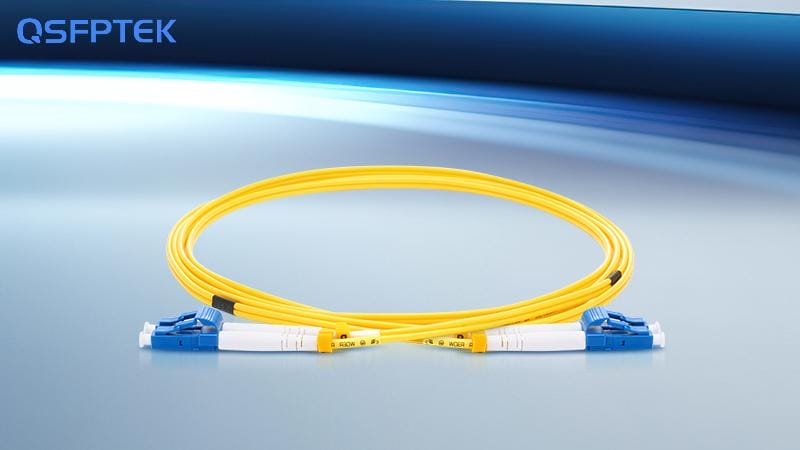
Designing Ultra-Long-Haul DWDM Systems: The Role of LC Duplex OS2 Patch Cords in Minimizing Link Penalties
Ultra-long-haul DWDM systems, spanning hundreds to thousands of kilometers, operate at the edge of optical performance limits. As channel densities increase and OSNR margins shrink, every passive component in the fiber path becomes a contributor to the overall link penalty. Among these components, LC Duplex OS2 patch cords play a critical but often underestimated role, directly affecting attenuation, chromatic-dispersion tolerance, return loss, and ultimately the FEC operating margin. In long-reach coherent and non-coherent DWDM architectures, the quality of these patch cords can define how efficiently operators utilize spectrum and how reliably the system maintains target BER.
OS2 Fiber Attenuation and Its Impact on Long-Haul Link Budgets
OS2 single-mode fiber offers low intrinsic attenuation around 0.38 dB/km at the C-band, but the connectors used within the system can significantly influence total span loss. In ultra-long-haul designs, where engineers carefully allocate every decibel between amplifier gain, span loss, and OSNR degradation, a poorly manufactured LC Duplex OS2 patch cord can introduce additional insertion loss.
Even a 0.2–0.3 dB increase per connector pair, caused by misalignment, poor ceramic ferrules, or degraded end faces, can force an operator to adjust amplifier gain, increase span count, or accept reduced OSNR. High-grade LC Duplex OS2 cords minimize these losses with tighter fiber concentricity, lower geometric deformation, and superior polish profiles, preserving the spectral efficiency of DWDM channels over long spans.
Connector End-Face Quality and Its Effect on Dispersion Tolerance
In coherent DWDM systems, chromatic dispersion is managed via DSP, but the optical path must still maintain sufficient signal quality before the DSP stage. Any increase in insertion loss or modal noise from low-precision connectors compounds the dispersion penalty, particularly in high-baud-rate channels.
High-quality LC Duplex OS2 patch cords ensure consistent end-face geometry, radius of curvature, apex offset, and fiber undercut, reducing scattering and maintaining a clean signal profile. This allows the coherent receiver to handle accumulated dispersion more effectively, supporting higher-order modulation formats such as 16QAM and 64QAM across extended distances.
Return Loss (ORL) and Its Influence on OSNR and FEC Margin
Optical return loss is a critical parameter in DWDM systems. Back-reflections can destabilize laser sources, increase phase noise, and degrade coherent detection. In submarine and terrestrial long-haul systems, ORL becomes more important as amplifiers and Raman pumping introduce their own reflection sensitivities.
LC Duplex OS2 patch cords with APC-polished connectors deliver ORL values typically better than -60 dB, significantly reducing coherent crosstalk and beating noise. Lower ORL directly supports higher OSNR, providing additional FEC margin, often the difference between error-free operation and a channel that requires regeneration.
Maintaining OSNR Through Cleaner Connector Interfaces
OSNR degradation accumulates over every span in a DWDM system. Dirty or scratched connector surfaces introduce micro-scattering, increasing noise accumulation. Because OSNR cannot be recovered, only compensated with gain, clean and well-manufactured OS2 LC patch cords act as a first line of defense.
Their stable end-face quality reduces nonlinear penalties, minimizes Raman-induced crosstalk variability, and ensures that amplifiers operate at predictable gain shapes. This stability is essential when running dense grids (e.g., 50 GHz or 37.5 GHz spacing) across transoceanic or long terrestrial routes.
Conclusion
In ultra-long-haul DWDM engineering, performance optimization extends far beyond optical amplifiers, ROADMs, and coherent transponders. LC Duplex OS2 patch cords play a central role in minimizing link penalties by reducing insertion loss, improving ORL, maintaining dispersion tolerance, and preserving OSNR across the entire optical path. As operators push toward higher spectral efficiency and longer spans, the precision and quality of these seemingly simple components can determine the overall reliability, stability, and capacity of the network.